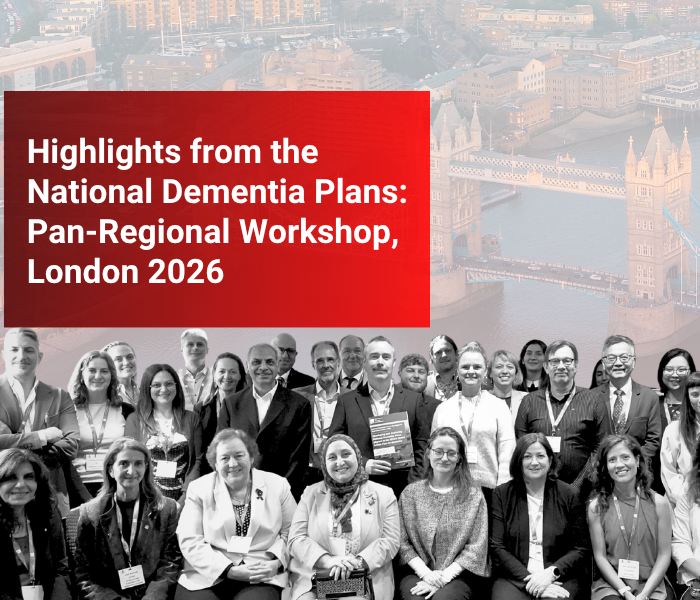
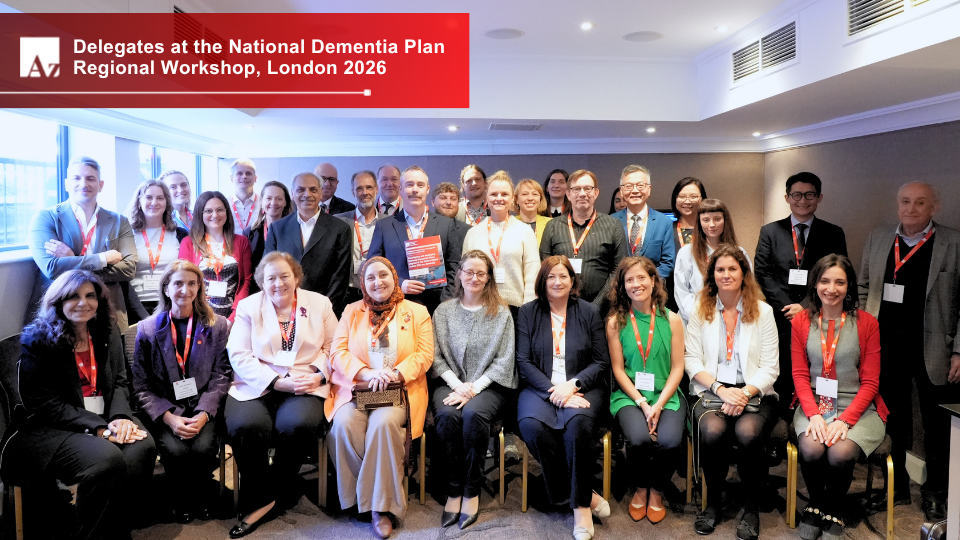
In June 2026, ADI hosted government representatives, dementia associations and global health experts over two days to explore progress and priorities to advance National Dementia Plan development and implementation in London, UK.
The event brought together delegates from Denmark, Egypt, Germany, Hong Kong, Jordan, Morocco, Netherlands, Spain and Sweden, as well as the World Health Organization to share updates on national dementia policies from across the globe insights.
We were delighted to be able to host this workshop through the kind support of event sponsors, including Biogen, Eisai, and Eli Lilly and Company.
On the workshop, Acting CEO Chris Lynch said:
This pan-regional workshop was a rare opportunity to bring so many governments and associations together with the sole purpose of improving national responses to dementia. This is something we have to task ourselves to do again. The clock is ticking on the extension to the Global Action Plan.
Day One
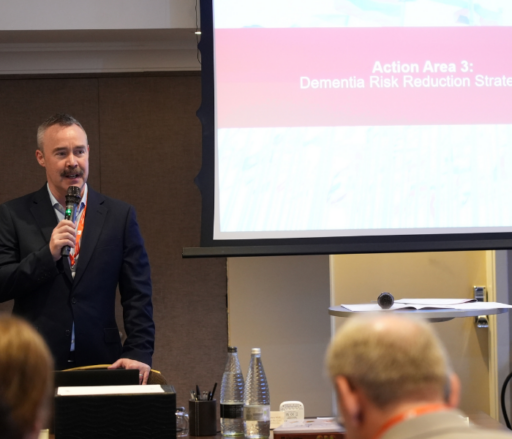 The first day commenced with opening remarks from Chris Lynch, Acting CEO of ADI, Dr Ching-Choi Lam, Chairman, Advisory Committee on Mental Health, Health Bureau, Government of the Hong Kong SAR and Dr Katrin Seeher, Dementia Specialist, Neurological, Sensory and Oral Conditions Unit, WHO
The first session focused on providing an overview of the WHO Global Action Plan on the public health response to dementia, including the seven action areas and targets, progress to date, delivered by Dr Laura Garcia Diaz, Dr Khalid Saeed, Dr Frédérique Djurdjevic and Conny Helder,
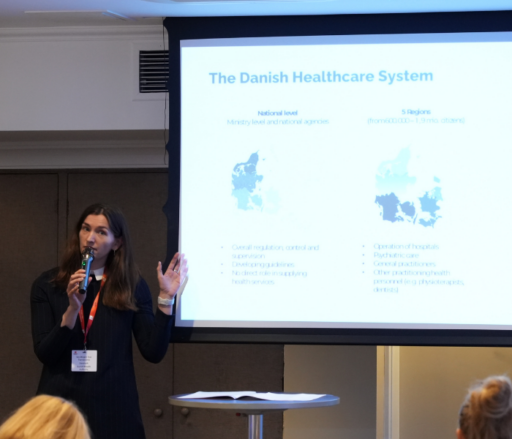
The following session delved into the current progress, barriers & solutions present in the dementia policy landscape, with updates provided by government officials from Denmark, Egypt, Germany, Jordan, Morocco alongside ADI dementia association members.
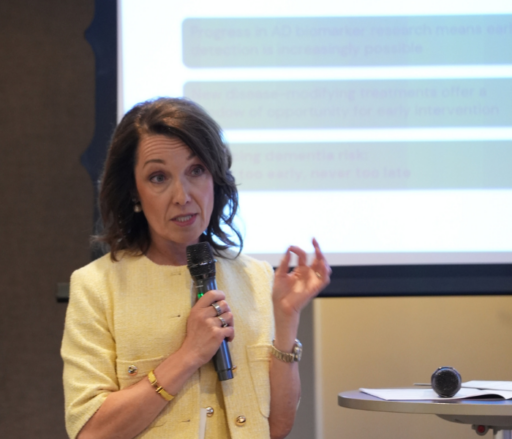 Next, ADI welcomed Prof Miia Kivipelto, MD, PhD, Professor of Clinical Geriatrics at Karolinska Institutet (KI), Dr Katrin Seeher and Lewis Arthurton, Head of Policy and Communications, ADI, who discussed Dementia Risk Reduction Strategies and their intersection with existing NCD policy frameworks.
Closing the day, the final session of Day 1 shone a light on raising Awareness and Dementia-Friendly Initiatives, providing information on organising a successful awareness raising campaign, with tangible examples provided by Ministry of Health Germany, Deutsche Alzheimer Gesellschaft, Confederación Española de Alzheimer y otras demencias (CEAFA) and Al Oun Jordan Association for Alzheimer’s Disease (AJAAD).
Day Two
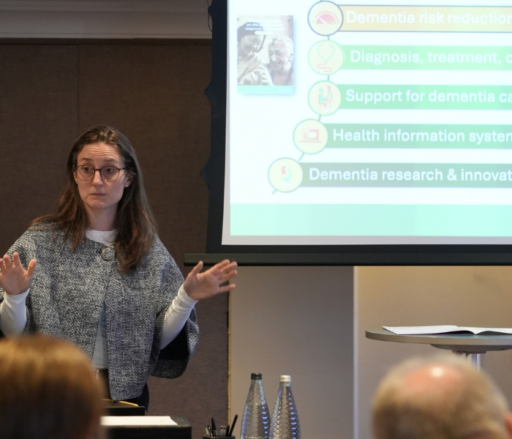
The second day began with a focus on Action Area 4 of the WHO Global Action Plan on the public health response to dementia, exploring the importance of integrating diagnosis, treatment, care and support into National Dementia Plans. Chris Lynch, Acting CEO of ADI, Paola Barbarino, Special Advisor at ADI, and Conny Helder, former Minister for Long-term Care and Sport of the Netherlands, examined the evolving landscape of dementia diagnostics and treatments, and discussed how countries can prepare for and incorporate these developments into their national responses. A key insight from this session illuminated that some countries in the process of renewing their national dementia plans are not presently considering the impact of emerging diagnostics and treatments, a crucial area that must be addressed.
In a following session, participants were presented with exemplar National Dementia Plans, showcasing approaches that set the benchmark for comprehensive, holistic and measurable dementia strategies. Lewis Arthurton, Head of Policy and Communications at ADI, was joined by representatives from the Ministry of Health Germany and Deutsche Alzheimer Gesellschaft, who shared insights into successful policy development and implementation.
The afternoon continued with Action Areas 6 and 7, focusing on the critical role of dementia research and information systems. Dr Laura Garcia Diaz and Chris Lynch discussed the importance of embedding research within National Dementia Plans, increasing investment in dementia research, and strengthening data collection and analysis to inform effective policy and service delivery.
Closing the workshop, a concluding roundtable brought together government and dementia associations to discuss dementia as a national priority. Delegates from Jordan, Morocco, Denmark, Egypt and Germany shared updates and challenges of their dementia strategy development and implementation. The discussion also explored the importance of language and terminology in shaping public understanding of dementia and reducing stigma.
A follow-up report of the National Dementia Plan Pan Regional Workshop, containing details insights and key takeaways from the event will be available soon.
Keep up to date with ADI’s latest news and resources by signing up to our newsletter