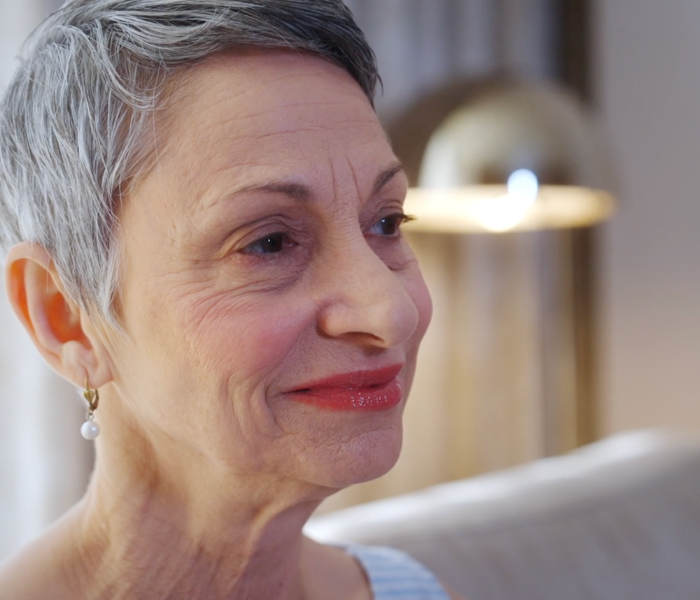
As part of ADI’s ongoing work to share global voices of those living with dementia, we are pleased to share a case study provided by Moneta Health, highlighting the importance of cognitive rehabilitation within post-diagnostic support. The case study features the words of Dahlia, who was diagnosed with early onset Alzheimer’s disease, as she shares her experience accessing cognitive therapy.
Dahlia describes herself as a “party in a paper sack” — someone who never needed anyone else to have a good time. Growing up in a close-knit community, she went on to build a career in sales, travelling widely and thriving on human connection. She was quick with numbers, a voracious reader, and someone who could walk into any situation with confidence.
That confidence began to quietly erode.
When things started to change
At first, the changes felt small. Dahlia would forget where she had put her phone, or lose a name moments after meeting someone. She told herself it was simply part of getting older. But the changes deepened. Everyday words would vanish from her mind mid-sentence. Large stretches of the day would disappear from her memory entirely, leaving her disoriented and unsure of her own thoughts.
For someone who had built a career on communication and connection, the impact was profound. Dahlia began withdrawing from social situations, worried she would lose the thread of a conversation, forget a name, or get stuck mid-sentence in front of others.
“I always felt like I could walk into any situation and I could handle it,” she says. That feeling was slipping away.
Getting answers took time. It was almost a year and a half before Dahlia was seen by a neurologist. She was eventually diagnosed with early onset Alzheimer’s disease.
Finding a new path
Dahlia’s physician suggested she try cognitive rehabilitation. Her first reaction was scepticism. How could this help her? But she was willing to give it a try.
Cognitive rehabilitation therapy is an evidence-based approach that helps people living with cognitive impairment to improve their everyday function. It is a non-pharmacological treatment focused on the individual goals of the patient, teaching practical strategies for daily life.
Delivered through Moneta Health, Dahlia’s program connected her with a dedicated therapist. Sessions were conducted remotely by telephone. She received personalised cognitive exercises each week alongside regular feedback on her progress.
“Once I met my therapist, I knew I was in good hands,” Dahlia says.
Building a foundation
The program did not restore everything Dahlia had lost. But it gave her something she had not expected: tools. She learned techniques for staying focused in conversations, managing the anxiety that came with memory gaps, organising her day, and recognising when to pause and rest. She learned how stress affects the brain, and how mindfulness can help.
“It empowered me and gave me tools that I felt I could use to begin to mitigate what I had lost,” she noted. “My brain still has so much to give”
Dahlia’s story points to something important for anyone noticing changes in their thinking or memory. Early diagnosis matters, and so does early action.
“Don’t wait,” she says simply. “If you notice changes in your memory, take action. See a physician, ask questions, do research. Your brain health is very important.”
Moneta Health delivers cognitive rehabilitation therapy as part of comprehensive dementia care and in partnership with healthcare providers such as the Benefis Health System.