The 79th World Health Assembly (WHA) brought together global health leaders, policymakers, NGOs, and advocates at a time of significant challenge and transformation for international health systems. Against a backdrop of geopolitical uncertainty and rapidly advancing innovation in diagnostics and treatments, ADI representatives used WHA to launch the 2026 edition of From Plan to Impact, engage in critical discussions with the World Health Organization (WHO), and highlight both the growing urgency of dementia policy to overcome access barriers and to leverage innovation and the emerging opportunities to integrate dementia risk reduction into non-communicable disease (NCD) health agendas worldwide.
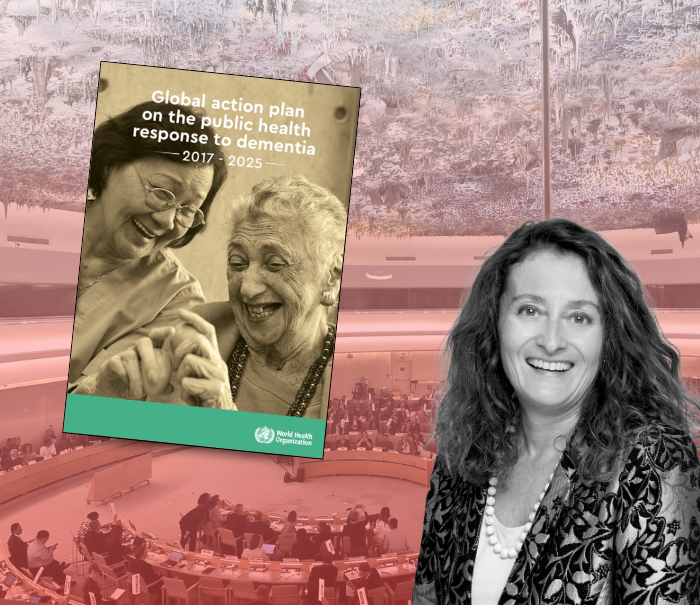
An interview with Dr Tarun Dua, a Unit Head in the WHO’s NCD & Mental Health Department, was a highlight of WHA 2026 for Chris Lynch, ADI Acting CEO. Held at the WHO Head Office, the conversation marked the one-year milestone into the six-year extension of the Dementia Global Action Plan. The discussion highlighted growing momentum among governments in the creation and implementation of national dementia plans. However, despite progress, only around 47 of WHO Member States have formally committed so far, with a further 20 plans currently in development. The conversation with Dr Dua was the perfect opportunity for Chris to launch the 2026 edition of From Plan to Impact.
At a time when innovation is outpacing policy, and we are seeing advances in diagnostics, treatments, and risk reduction evidence , a key message from the conversation was the need to accelerate the translation of policy into practice. Greater innovation in tandem with stronger integration of dementia care into primary care systems were identified as essential to addressing the scale of the challenge. For people living with, or at risk of, dementia, the need for action remains urgent.
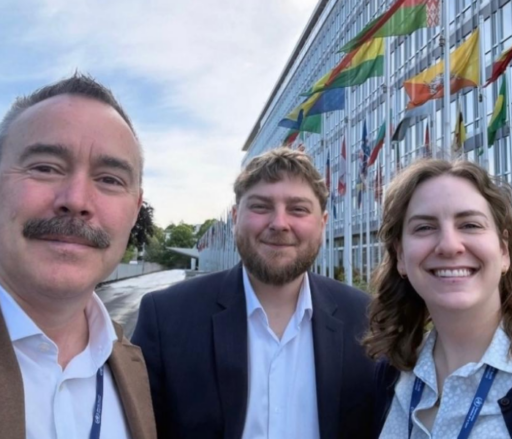 One of the notable features of WHA 2026 was the significant increase in the number of side events, with more than 100 additional sessions compared with the previous year. The growth reflected a global health community responding to ongoing geopolitical upheaval with renewed emphasis on health as a priority. A significant number of high-profile side events focused on innovation, access, and collaboration across health sectors. These included a session hosted by the WHO Foundation, as well as a roundtable organised by the Global Coalition on Aging and Eli Lilly & Company on “Closing the Innovation and Access Gap”.
Setting the scene for this session, Chris highlighted the crucial issue that innovation around dementia is outpacing policy and practice. With governments and healthcare systems struggling to keep abreast with diagnostic changes, new treatments, and a challenge to the very definition of a diagnosis of dementia, he posed the question about what stage we start to measure the value of new interventions, at the point of slowing symptomatic progression or at the point, up to 20-years earlier, when disease pathology starts and when the impact of risk reduction strategies can be measured.
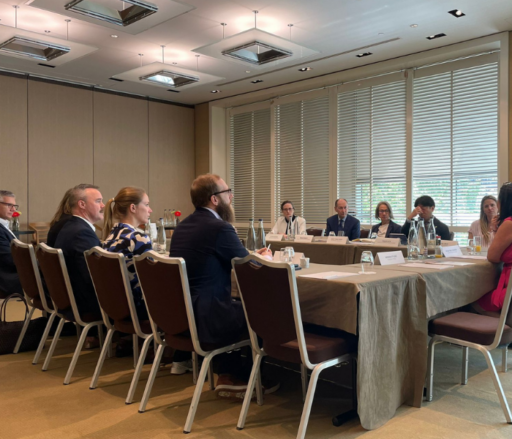
The roundtable shared insights from other conditions that have previously had to overcome many of the barriers that dementia now faces: low awareness, stigma and adapting to novel treatments and diagnostics. Stroke, HIV/AIDS, Cancer and Chronic Kidney Disease were all represented in a truly enlightening, and often difficult, conversation.
ADI also delivered multiple statements at the UN Palais des Nations, including several constituency statements developed in collaboration with other NGOs to strengthen and amplify shared advocacy messages. Among the key contributions was a shared statement focused on the implementation of the UN Declaration on Non-Communicable Diseases (NCDs).