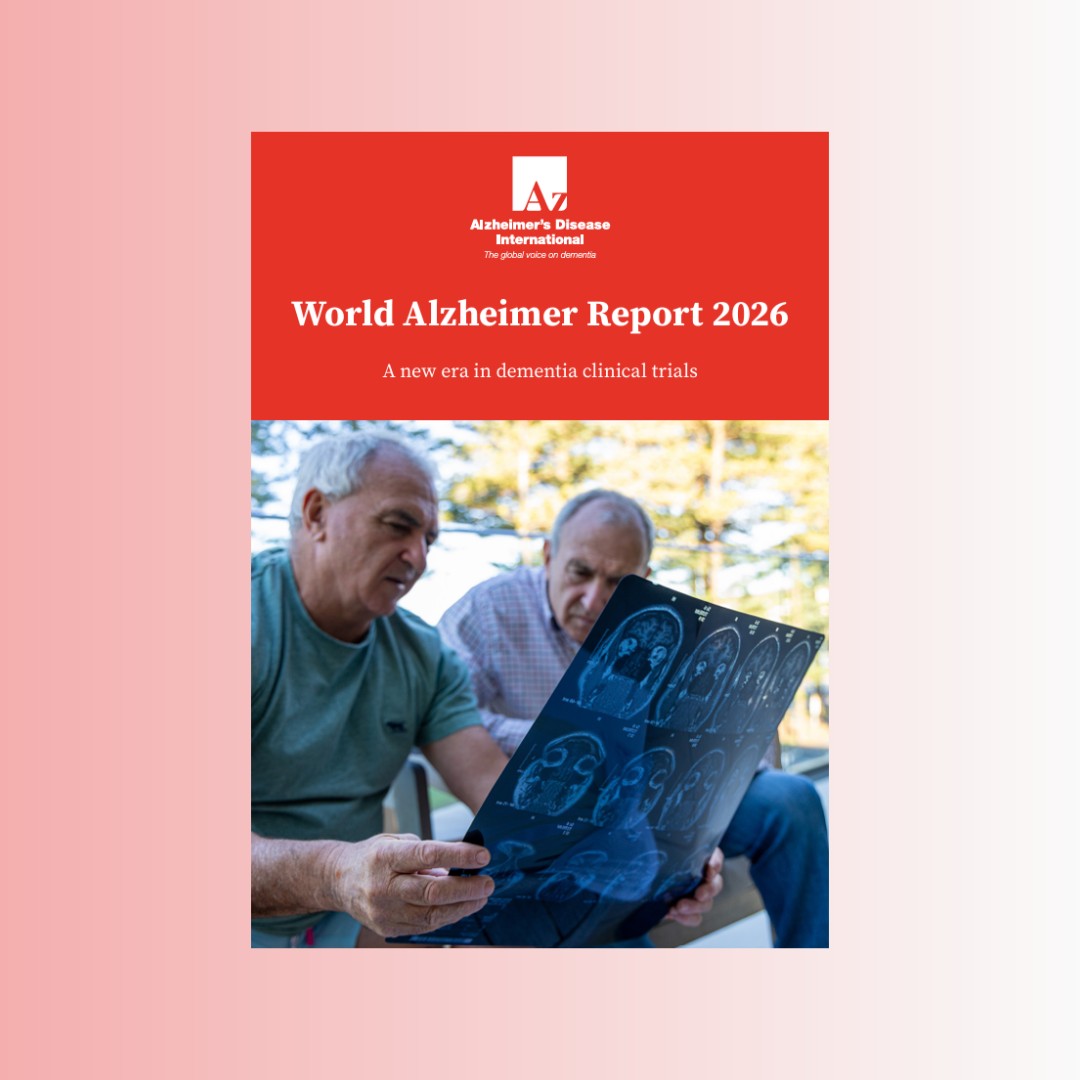

I joined ADI as its CEO in October, shortly after the launch of the World Alzheimer Report 2026: A new era in dementia clinical trials in September, the findings of which were striking, serving as a reminder of the urgency, determination and collective action needed to address dementia worldwide and the opportunities emerging from scientific advances.
It has been a couple of weeks now, and my first weeks have been focused on listening, learning and connecting with colleagues, our Board, member associations and partners around the world. Their unwavering commitment, expertise and passion for improving the lives of people affected by dementia has not only been inspiring it has extremely insightful. It has also been very clear that ADI’s greatest strength is its people and our global network.
Venturing further afield, my first external engagement took me to the World Dementia Council Summit on the 20 October in London, I always prefer journeys where I only need is a train ticket! And this was one of those. As experts, researchers, policymakers and advocates, grappled with the notion of an ‘new patient’, before symptoms and after diagnosis, I would say it was a summit where science met scrutiny, sparking ideas and important conversations about what opportunities lay ahead and how we might collectively translate scientific breakthroughs into meaningful progress for people affected by dementia.
A key theme of the summit was a powerful message: the science is advancing, but access is not keeping pace.
Advances in early diagnosis and biomarkers, alongside emerging treatments for Alzheimer’s disease, are opening new possibilities and offering renewed hope for people affected by dementia worldwide. But we also know that millions of people worldwide still lack access to a timely diagnosis, appropriate care and support.
As a community we need deliberate action to ensure that emerging scientific breakthroughs do not widen existing inequalities, particularly in low- and middle-income countries.
I see this as both an opportunity and a responsibility for ADI. We must continue to work closely with our members and allies to advocate for research that reflects global diversity, support governments to translate commitments through national action plans and policies and stronger health systems, which can offer an integrated package of care ensuring greater access to diagnosis and treatment.
It is only early days for me; but my first weeks have reinforced both the scale of the challenge and the extraordinary opportunity before us. I am excited to work alongside our members, colleagues and partners to turn scientific promise into real progress for the communities we serve.
Because innovation without access is not progress.
Our collective ambition must be a future where no one affected by dementia is left behind.
Thank you.
Dr. Faith Mwangi-Powell