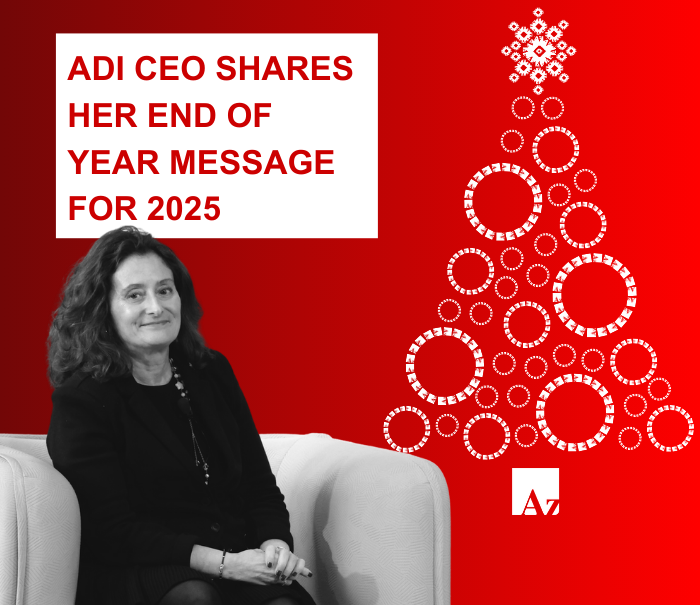
As we approach the end of the calendar year, ADI CEO Paola Barbarino shares her end-of-year message with our members, friends and colleagues, reflecting on our work in 2025 and offering a preview of what 2026 will bring.
Throughout the year, ADI has continued to raise global awareness of dementia, advocate for stronger dementia policy and highlight the challenges that families around the world face every day. In her message, Paola expresses her sincere thanks to all who supported ADI in 2025.
Paola’s message:
“As we come to the close of 2025, I want to take a moment to reflect on this year and, above all, to express my deepest gratitude to so many of you.
To our member associations across more than 120 countries, to people living with dementia and their carers, to researchers, clinicians, advocates, policymakers, partners and supporters: thank you. Everything ADI has achieved this year has been possible because of your commitment, your collaboration, and your belief that people living with dementia deserve better from our governments and from our health care systems.
2025 has been a year of great success for our community. It was in particular a significant year of progress on the international policy stage.
One of our most important achievements came in May, at the World Health Assembly, when WHO Member States voted unanimously to extend the Global Action Plan on the public health response to dementias until 2031. This was the result of eighteen months of sustained advocacy by ADI, working closely with our members and partners around the world.
This extension is far more than a procedural decision. It represents a renewed global commitment to prevention, to earlier and better diagnosis, to access to care and treatments, and to meaningful support for people living with dementia and their carers. It also reinforces the importance of national dementia plans as the foundation for real, lasting change. We must continue this momentum towards our goal, that every single WHO member state must have a robust, funded and actionable national dementia plan. And behind that plan there needs to be a real tangible committment to make lives better for people who live with dementia and for their family care partners.
This year, we also took the bold decision to address a long-standing gap in global health policy: the failure to recognise Alzheimer’s and dementia as a major non-communicable disease (an NCD). This should have long been the case, dementia is obviously a major Non Communicable disease but sadly, a for a number of historical reasons it had never been acknowledged as such. And this acknowledgement was very important at a number of levels. For example, so many times our members would ask their governments for risk reduction campaigns in common with other NCDs like cancer or heart disease but been told dementia could not be included because it was not an NCD.
So we set our heart to change that.
In 2025, our research, published in Nature Reviews Neurology, showed that dementia was on track to become the third leading cause of death worldwide from 2040, and among the top ten causes of death in 166 countries. Having uncovered these stark facts we then set to demand a global response.
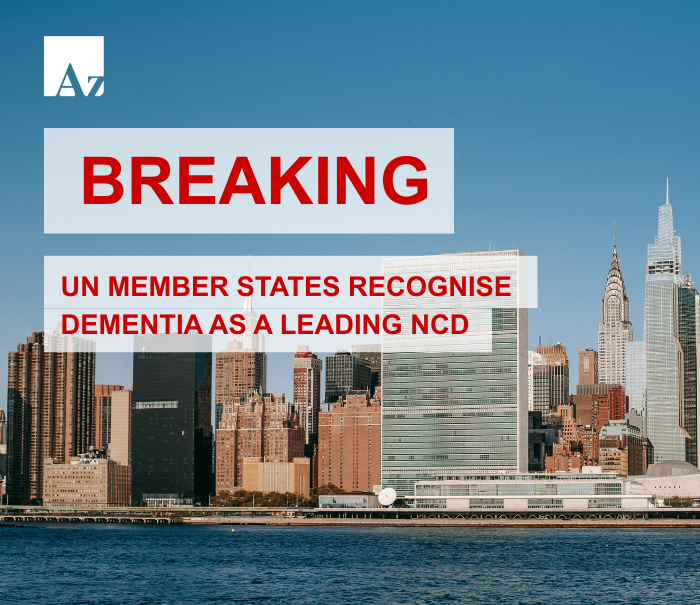
Armed with this evidence, ADI advocated strongly at the United Nations for dementia to be recognised as a non-communicable disease at the General Assembly. And we won! Dementia was formally included in the text of the political declaration emerging from the High-Level Meeting on NCDs in September and this has now been formally ratified in December.
Why does this matter? Because recognition opens doors to lasting change. It allows dementia to be fully integrated into NCD prevention strategies, strengthens collaboration with the wider NCD community, and accelerates action on risk reduction. We now know that up to 45 per cent of dementia cases could be delayed, or even prevented, by addressing modifiable risk factors. The human, social and economic case for action is undeniable.
2025 has also highlighted profound challenges around access to new treatments.
While promising disease-modifying therapies are emerging, access remains deeply unequal across countries and regions. This year, ADI shone a light on these inequities through our “Travelling for Treatment” campaign, sharing the powerful stories of people forced to travel vast distances, sometimes across continents, to access treatments unavailable in their home countries.
These stories remind us why ADI continues to stand firmly for equality of access. Every person should have the right to make informed choices about their care and treatment, based on their needs and wishes, not their income or their passport.
There were plenty of other highlights in 2025 , but now let me look ahead and tell you why 2026 holds a particular significance to our community.
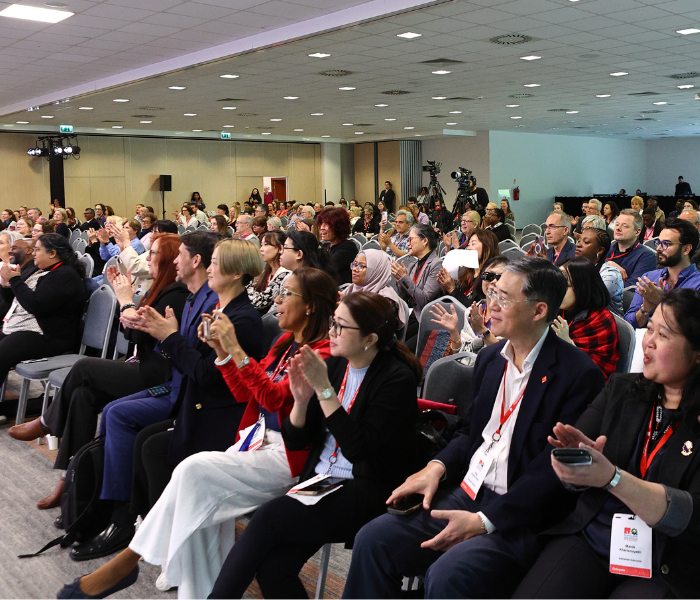
From the 14th to the 16th of April, we will gather in Lyon, France, for the 37th Alzheimer’s Disease International Global Conference. This will be a defining moment for our global community.
France’s decision to host the conference comes at a critical time, as the country moves forward with a new national strategy on neurodegenerative diseases. The conference will provide a unique platform to mobilise stakeholders, share evidence and experience, and ultimately reinforce the need for strong national dementia plans, both in France and around the world.
In Lyon, researchers, health professionals, policymakers, advocates, people living with dementia and carers will come together with a shared purpose: to advance rights, improve care, reduce risk and build a more equitable future for everyone affected by dementia by innovating dementia solutions for today and tomorrow.
As we close this year, I want to thank you once again for standing with ADI. Your voices, your expertise and your determination drive everything we do.
I wish you and your loved ones a restful end of year, and I look forward to continuing this vital work together in 2026, especially in Lyon to shape the future of dementia policy, research and care worldwide.
Thank you, and I look forward to seeing you in France.”
ADI would like to thank all our incredibly generous donors and sponsors for supporting our work this year. We give special thanks to The Mary Oakley Foundation, Inc., The Dan and Diane Riccio Charitable Fund for their generosity, as well as our Corporate Partners: Biogen, Bristol Myers Squibb, Eisai, Johnson & Johnson, Eli Lilly and Company, Novo Nordisk, Otsuka, Parexel and Roche.