
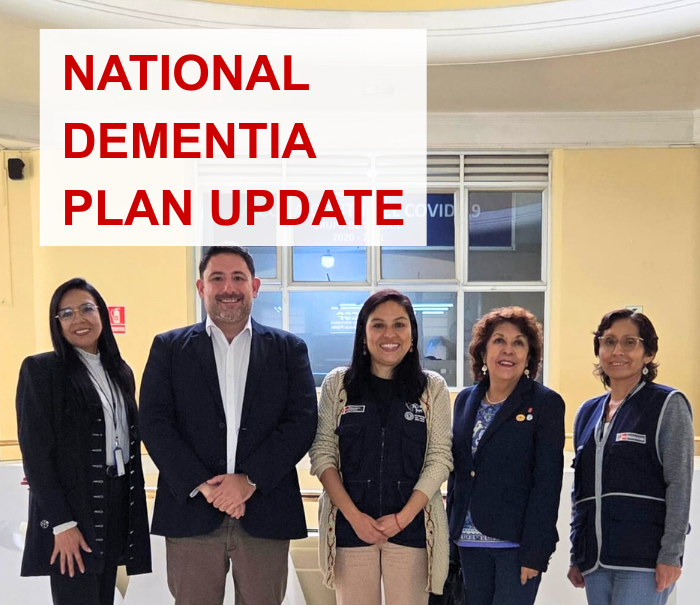
ADI welcomes the approval of Peru’s National Plan for the Prevention and Treatment of Alzheimer’s Disease and Other Dementias 2026–2028, officially validated by the Ministry of Health through a newly published ministerial resolution.
For many years, Peru has faced the challenges of an ageing population with limited specialised services, insufficient early diagnosis pathways and fragmented support for carers. The endorsement of this national plan marks a decisive shift: dementia is now recognised as a public-health priority requiring coordinated action, investment and accountability across the health system.
Reflecting on this achievement, Diego Aguilar, Regional Director for the Americas at ADI, said:
Peru’s approval of its national dementia plan sends a clear message: we are moving from intention to action. This is a victory for families, for carers, and for every organisation that has worked tirelessly to make dementia impossible to ignore. We congratulate APEAD for their leadership and look forward to supporting Peru as this plan becomes reality.
APEAD: Two Decades of Leadership and Commitment
At the heart of this achievement is ADI’s long-standing member organisation in Peru, the Asociación Peruana de Alzheimer (APEAD). For more than twenty years, APEAD has been a pillar of support for families, a driver of public awareness, and a consistent advocate for national policy change.
Through public campaigns, carer support, and active engagement with policymakers, APEAD has built the foundations that made this moment possible. Their work—often carried out with limited resources but unwavering dedication—has shaped the national conversation on dementia long before the issue became a governmental priority.
Strategic Partnerships Strengthening the Movement
This approval is also a testament to the powerful coalition that has emerged in Peru in recent years. APEAD’s collaboration with the Global Brain Health Institute (GBHI) and Impact Salud has accelerated technical capacity, strengthened advocacy, and connected Peru to regional and global initiatives in brain health.
GBHI’s fellows and projects have contributed cutting-edge expertise on early detection, care pathways and training, while Impact Salud has supported policy dialogue and research translation. Together, these organisations have created the momentum that has now translated into national policy.
Dr Sofia Cuba (Impact Salud Project) said:
Today we celebrate the publication of the National Plan for the Prevention and Treatment of Alzheimer’s Disease and Other Dementias in Peru, a fundamental step toward strengthening the health system’s response to one of the leading causes of disability and dependency in the country.
This Plan sets out an evidence-based roadmap to improve early detection, access to health services, research, family and community support, and the intersectoral coordination needed to address Peru’s rapidly ageing population. It also incorporates a rights-based, equity-driven and comprehensive-care approach that marks a milestone for public policy in mental health and older people’s health.
A Regional Step Forward
Peru’s progress adds momentum to the broader regional effort to align national policies with the WHO Global Action Plan on Dementia. With countries such as Brazil, Argentina and Mexico taking advancing steps in recent years, Peru’s approval strengthens the Americas’ collective leadership in dementia policy development.
ADI will continue working closely with APEAD and its partners as Peru enters the implementation phase. The priorities ahead include strengthening early diagnosis, improving access to care, supporting caregivers, and building a trained health workforce, will require sustained collaboration and commitment.
But today, Peru has taken a major step forward. And that step begins with the recognition, at the highest level of government, and that people living with dementia and their families deserve coordinated, evidence-based action.