
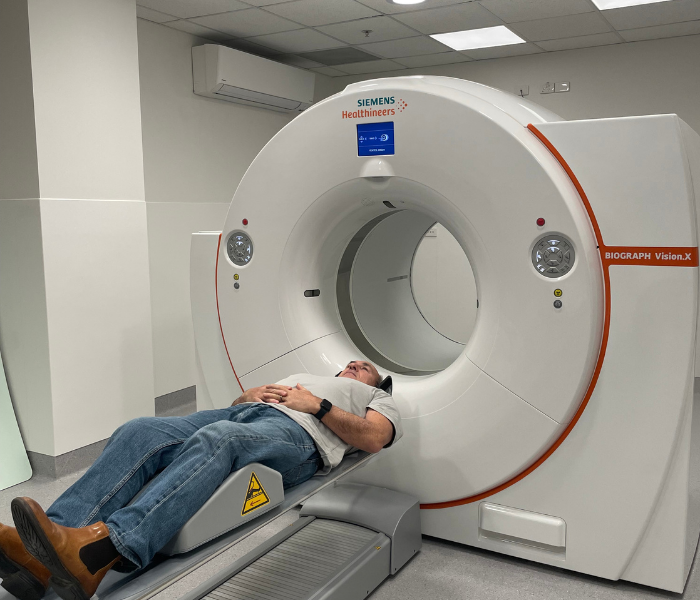
On 14 August 2026, it will be seven years since I sat beside my wife Nicole in the geriatrician’s office and heard the words that would change my life forever:
You have Young Onset Alzheimer’s dementia.
Sometimes it feels as though that conversation only happened yesterday. At other times it feels like it was another lifetime. That moment divided my life into two chapters, my life before the diagnosis and my life after. Since that day, dementia has reshaped every aspect of my life. It has challenged how I see myself, how I relate to others, and how I navigate the world around me.
Like many people, my first response wasn’t just shock. It was a mixture of fear, anger and sadness as I began to mourn the person I had always been. I desperately wanted my old life back – the teacher, the Deputy Principal, the husband and father who had always planned for the future with confidence and a willingness to move ahead in life with his family.
Almost overnight, my life became filled with an array of unanswered questions which brought a lot of uncertainty into my life. I didn’t know how quickly my condition would progress, what kind of life I would have, how it would affect my family, what support would be available or even who would continue to walk alongside me on this journey.
Over time I learnt something that I never expected. While I couldn’t change my diagnosis, I could change how I chose to live with it. The moment I accepted that dementia was now part of my life, rather than spending every day at home feeling sorry for myself, was the moment I began to heal emotionally. Acceptance did not mean giving up. It meant redirecting my energy towards the things I could still control – my health, my family and relationships. This was also around I found advocacy, and with it a reason to keep pushing forward. I was determined to keep living an active life. One that I enjoyed, one that had meaning and purpose for me.
Yet, if I am completely honest, acceptance did not make the fear disappear. It simply taught me how to live alongside it.
Living with hope and uncertainty
Six months after receiving my diagnosis, I was fortunate to be accepted into a novel clinical trial that was investigating the neuroinflammatory hypothesis, using an experimental drug called XPro1595. As part of the Phase 1b trial, I received weekly injections for a period of fifteen months before being granted access to the experimental treatment for a further three years through Australia’s ‘Special Access Scheme’. In total, I have received this experimental treatment for a total of four and a half years.
From the very beginning, I believed that if we are ever going to find more effective treatments – or dare I say a cure – for Alzheimer’s disease, it will be through research and the willingness of people living with dementia to participate in clinical trials. Taking part was never just about me. It was also about being part of something much bigger than myself and helping create a future where others living with dementia might have access to better treatment options than are currently available today.
I also had my own hopes. I hoped that the treatment might slow the progression of my condition. I hoped it would allow me to remain independent for longer and continue living an active life. Above all, I hoped it would give the opportunity to be around as my children built their own lives.
But participating in research also came with an emotional cost.
During the three years that I received XPro 1595 through Australia’s ‘Special Access Scheme’, I never really knew whether this experimental drug was helping me. Unlike most clinical trials, there was no regular imaging or detailed testing which would give me insights into what was happening inside my brain. My GP monitored my general health and reported any side effects to the pharmaceutical company, but beyond that I was left largely on my own. Even though a nurse administrated the experimental drug, each week into my abdomen. I had no way of knowing whether this treatment was slowing down the progress of my condition, making no difference at all, or perhaps doing something that neither I nor the researchers yet understood.
That uncertainty gradually became one of the most difficult parts of my journey with dementia. There were times I found myself wondering whether I had become little more than a guinea pig. I had committed myself to a treatment regime that required considerable dedication, yet I had no way of measuring whether it was going to be beneficial to me or simply giving me false hope for a future that might never exist.
Looking back, I realise that hope and uncertainty had become my constant companions. I needed hope to keep moving forward with my life, yet uncertainty was always there, reminding me that the answers I sought remained hidden somewhere hidden inside my brain.
Register for the launch of the 2026 World Alzheimer Report: A New Era in Dementia Clinical Trials
Living from injection to injection
Sometimes I’m asked what life was like during the four and a half years that I received weekly injections of this experimental drug. The simplest answer is that I lived from one injection to the next.
The injections became part of my weekly routine. They were both a constant reminder that I was living with a progressive neurological disease, and a source of hope that they might be slowing down its progression. Because the medication had to remain refrigerated (below 4oC), travelling overseas or interstate required careful planning. I couldn’t simply pack the experimental drug into my suitcase and leave. Every overseas conference that I attended, every master’s competition that I competed in, every holiday that I went on, and every speaking engagement I had lined up, needed to be carefully planned around my treatment schedule.
The most significant side effect I experienced was severe bradycardia as my heart rate would constantly drop below 40 while I was resting. Thirty-three was the lowest it reached. As a master’s competitor, I always had to train early in the morning before an event, to ensure that my heart rate was high enough to compete. Recently, my cardiologist has told me that a pacemaker maybe necessary if my heart rate doesn’t return to a normal rhythm.
Looking from the outside, people probably assumed that life had returned to normal for me. However, the reality for me was very different. Quite simply, I understood that I was living a life on borrowed time, and where the injections gave me hope for a better future, I also realised that things could change at a moment’s notice.
For several years, this became my normal life. It was built on routine, hope and a quiet confidence that the experimental treatment might be helping me.
When doubt began to creep in
Towards the end of 2024 I began noticing small changes that made me question whether the experimental treatment was still working. Some days I felt I was doing quite well. Other days I noticed changes in my sense of smell and taste. I also experienced unusual visual perceptions, such as seeing what looked like puddles of water reflected across the polished floorboards in my home. Looking back, I have often wondered what those experiences really meant. At the time, I had been reading extensively about the symptoms of dementia, and in hindsight, I sometimes question whether I had unknowingly begun interpreting these experiences through the lens of my diagnosis. Perhaps some of what I noticed reflected changes in my condition. Perhaps some reflected the heightened awareness that so often accompanies living with an incurable disease such as Alzheimer’s. The truth is I simply don’t know.
One of the challenges of living with dementia is that even small changes can take on enormous significance. A forgotten word, misplacing my mobile phone, a moment of confusion or an unusual experience suddenly becomes a question that starts to kick around in your mind.
Is this normal?
Is my dementia progressing?
Has the experimental drug stopped working?
As those questions tend to stay in my mind for days and even weeks, they started to erode away my self-confidence, making it difficult to know what to believe. As the months passed, I found myself becoming increasingly hypervigilant, constantly monitoring my own thoughts, behaviours and physical health for any signs that things were changing for the worst. Eventually, after speaking with my geriatrician and through my own personal reflection, I decided that, given my growing concern about possible side effects, the experimental treatment was probably no longer providing the benefit that I had hoped for. I then made the difficult decision to stop taking XPro 1595 at the end of July 2025.
As I came to believe that my dementia was progressing and therefore time was becoming a limiting factor in my life, there was a subtle shift in how I was perceiving the world around me. I now became determined to achieve the goals that I had initially set for myself. As a result, I didn’t stop and think about how my choices or comments that I should have kept to myself, would impact on those closest to me. For this I am genuinely sorry to anyone that I may have offended.
Before I had the opportunity to carry out this decision, an unexpected email arrived on 8 July 2025.
Following disappointing Phase 2 clinical trial results, the company announced that access to my experimental treatment would cease on 27 July 2025 and any remaining medication would then need to be destroyed.
As the decision had now been taken out of my hands, it affected me much more deeply than I had expected. For the first time since receiving my diagnosis, I found myself being confronted with my own mortality in a way that I had managed to avoid for so many years.
What is Scanxiety?
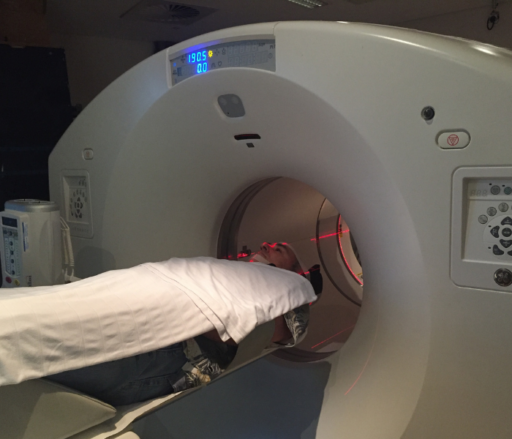 Scanxiety, is a well-known term that describes the emotional journey that exists between having a scan and receiving the results of that scan. Although rarely spoken about in the area of dementia, I have found that my scanxiety started from the day that I decided that I would have another Amyloid PET scan to determine what changes were occurring in my brain. From that moment on, each passing day has brought with it a series of unanswered questions.
Has the amyloid continued to spread throughout my brain?
Has the experimental drug changed the progression of my condition?
What happens if the experimental drug has made no difference at all?
Or could something completely unexpected have happened?
Living with those unanswered questions has become one of the most emotionally challenging parts of my journey with dementia over the past year. Recently this has reached a peak as the date for my repeat Amyloid PET scan is now drawing closer and closer. I have started to notice a number of subtle changes starting to occur in my body. These include struggling to fall asleep at night, finding it harder to concentrate and my mood becoming more unpredictable. Even my usual enthusiasm for swimming training and working out in the gym has started to fade.
Despite my best efforts to keep my life as normal as possible by continuing to follow a regular routine, the same unanswered question has kept returning to my thoughts:
What is happening inside my brain?
Over the past year, I have explored every possible scenario hundreds of times in my own mind. Although it is extremely likely that the amyloid has continued to accumulate throughout my brain, I have tried to prepare myself emotionally for that possibility while still remaining open to other possibilities.
What happens if the scan shows that the amyloid load in my brain has remained stable or there has been a reduction?
Why I waited almost a year
Many people have asked why I have waited nearly twelve months after stopping treatment before having another Amyloid PET scan.
The answer is simple.
I wanted to give my brain every possible opportunity to show whether the experimental treatment that I had been receiving for 4.5 years had produced a lasting biological effect. Although XPro 1595 has no biological mechanism designed to remove amyloid deposits from the brain. It does, target neuroinflammation, which is the chronic inflammation within the brain that is increasingly being recognised as an important contributor to Alzheimer’s disease. This has left me wondering whether something unforeseen might be occurring in my brain.
Could the drug have somehow reset my immune system?
Could the drug have improved the brain’s ability to remove amyloid?
Or has the disease simply continued to progress exactly as expected?
Following my meeting in early August 2026 to review the results of my scan, I will finally have an answer to this question. What changes have occurred in my brain as a result of taking XPro 1595?
What survival means to me
People sometimes ask whether I consider myself a ‘survivor’, but I’m not sure that word feels right.
When I was first diagnosed with Young Onset Alzheimer’s Disease in August 2019, I held onto an extraordinary dream, that I rarely talk about. I wanted to become the first survivor of Alzheimer’s Disease. At that time, survival meant finding a treatment that would cure this progressive disease.
Over the years, I have come to realise that being a ‘survivor’ is not so much about overcoming dementia as I once thought. Perhaps it is more about refusing to let dementia define who you are and continuing to live an active life that you can enjoy. One filled with purpose and meaning.
Looking forward
As I’m writing this article, it is Friday 24 July 2026 and I’m about to board a plane to Melbourne to have my second Amyloid PET scan.
Although I accept that the amyloid PET scan will more than likely show that the amyloid has continued to accumulate in my brain. I still have hope, as slim as it might be, that the experimental drug in combination with the nutritional brain supplement, Souvenaid, and the way that I have chosen to lead my life via my Tree of Awakening your Positivity, may have somehow altered the biology of my condition in ways we do not yet fully understand.
For me, hope and uncertainty continue to coexist.
Whatever the outcome, I know one thing with certainty.
My journey with dementia has taught me that hoping for a better future, is not about pretending that fear doesn’t exist, escaping the uncertainty that comes with a diagnosis of dementia or avoiding the difficult days. It’s about always moving forward with your life, even if it’s just one small step at a time. It’s about having the resilience and belief in yourself to always keep going.
That is why one of the most important leaves in my tree, is the piece of advice that I received from a past student named Alison. She told me to always ‘Just keep swimming’. For me, it is more than a phrase – it’s a mindset that has become the foundation of everything that I have achieved.
Perhaps this is the greatest lesson dementia has taught me. To never give up on life despite the obstacles that are in front of you.
I choose to ‘Just keep swimming’.